Burberry in Busan
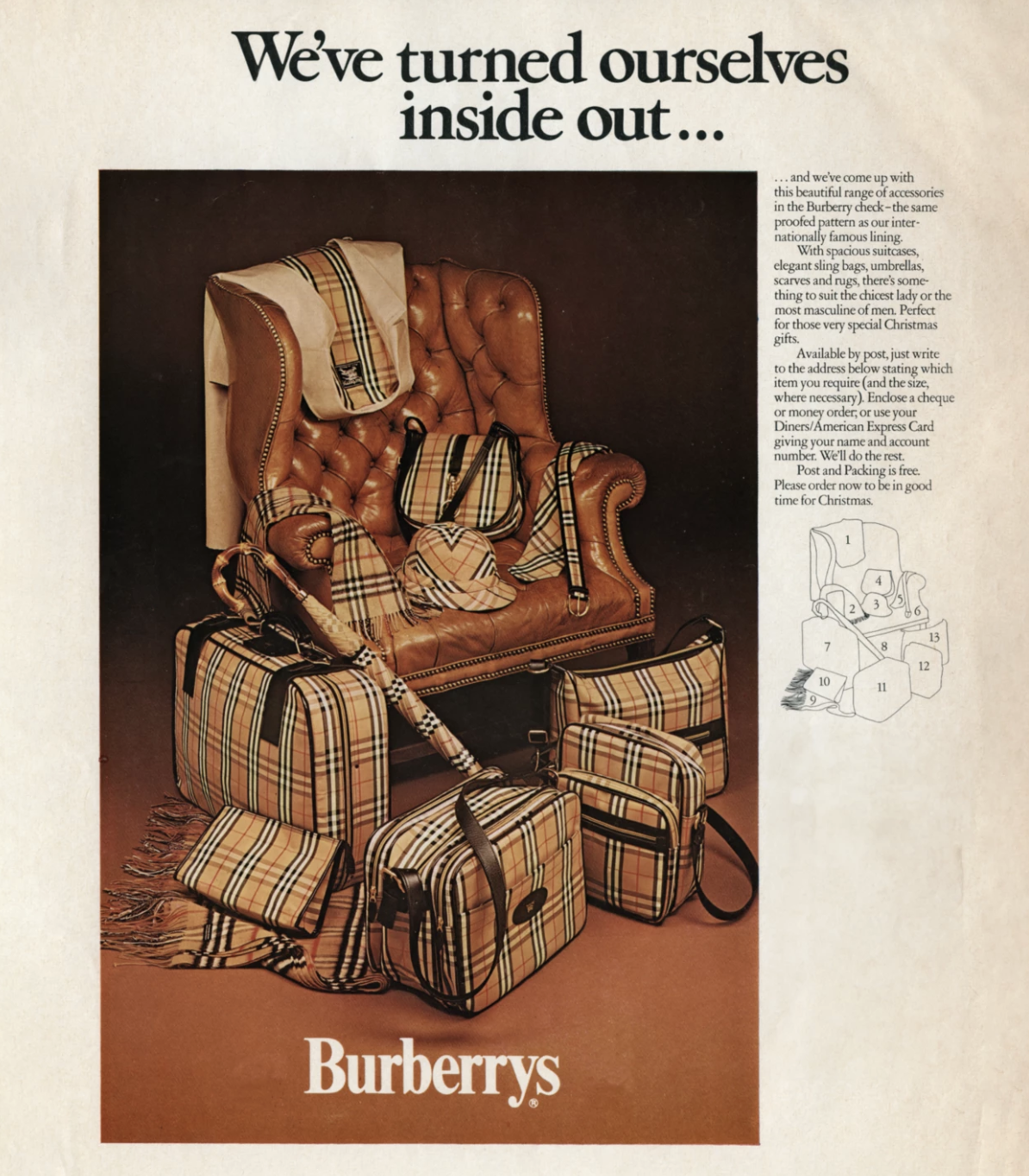
the “inside out” advertising campaign of Burberry
I remember exactly where I was the first time I noticed the Burberry check. It was a rainy day in autumn of 2005 and someone in the crowd of commuters snapped open an umbrella in that signature, four-color tartan, awakening me to the brand. I don’t remember anything about the person who carried it – age, gender, overall presentation, whether they were in company or alone – but it was so unexpected a scheme that it registered as unique. Something to set this particular afternoon apart from all the others. And then I saw it the same check again on a handbag, and then a scarf. And I began to wonder, wait, is this a thing? Do these four colors in this arrangement actually mean something?
I had also just crossed the Place de la Comédie, the central plaza of Montpellier, France on my way to the train station during a semester of study abroad - for a degree in English. In France. Whatever, it made sense at the time - so everything was already kind of dipped in that dewy impressionable glow of a North American homosexual’s first foray into Europe, but really that’s just stage setting. I was in a very absorbent stage of my life. Everything was new and magical and so awfully important by virtue of having happened to me. The fact that it wasn’t Paris and I slept in a concrete dorm with malfunctioning hot plates living off Nutella sandwiches along with all the other exchange students somehow made it even more exotic and appealing that I swiftly adopted a pretended weltschmerz with everywhere else that was anywhere else, despite the fact that it had been my very first time on an airplane and I had never previously been further abroad than a high school band trip to Toronto. Oh no, it isn’t Paris, but then ah * sigh * where is?
I was even more insufferable then, if you can believe it. I haven’t touched Nutella since.
But that check lodged with me. Having never noticed it before, I assumed it was some sort of quirk of French fashion. An abbreviation of an established - and francophone - fashion house. I was just beginning to be more aware of presentation. Scarves, for example, I noticed were so en vogue among the average French person of any age and gender that the day I arrived I was sure to buy one before even leaving the airport. Even if my accent and grammar sounded like I still did my lessons in crayon, I at least wanted to look like a local.
It was only after the semester wrapped and I returned to the States and started noticing the check at home – handbags, scarves, umbrellas, I hadn’t yet detected it on coats – that I started thinking wait a minute…has this just been here all along and I never noticed? Like a word I thought was newly introduced but has been in the dictionary for decades if not centuries while I just pooped along in ignorance of “accolade” and “effervesce” and “prurient”. Just how far behind the times was I? (Hey cats, ya dig those hip tracks off the new Pat Boone record? Downright swell.)
The answer was yes. The Burberry check was not new. And Burberry is not French. As the name clearly suggests a brand whose executives emerged from the womb in tweed. But this was just before the era when major fashion labels decided to hell with understatement and began to announce themselves in size 72 point font, and I was still buying my clothes from Walmart. So I had no immediate, or provable ideas on the source of this plaid. I just knew it was suddenly everywhere because I was just at the periphery and the tail end of the Burberry chav culture.
Okay, so for a non-Brit and a semi-professed anglophobe who doesn’t care at all about the British class system, this is going to take a bit to adequately explain, but bear with me.
First, Burberry – originally Burberrys of London, founded 1856 – trademarked its signature four color plaid (beige, red, white, black) in 1921 and stitched it as a lining to raincoats. As said lining was not visible when worn - and thus making a Burberry coat indistinguishable from other tan, well-constructed raincoats on a high street - wearers took to the fashion of rolling up the cuffs to reveal the tartan underneath, the small flash of accoutrement thus proclaiming the provenance of the coat and the quality of its wearer. This isn’t just a raincoat. It is Burberrys. And I am the discerning sort of person who wears one.
Then in the 1967, a storefront clerk at the Parisian branch of Burberrys created a startling advertising display by turning the trenchcoats inside out and – so the story goes – even cutting out the linings of a few to create an impromptu handbag and – yes – umbrella. It was theater. Neither were functional, but Burberry mania followed, and the brand bet almost all its chips on accessories, even declaring “we’ve turned ourselves inside out.”
Which, honestly, from a marketing standpoint is a pretty damn good revitalization campaign for a century old brand that built its name on the heritage and predictability of its product. Even if you make the best raincoat in the world, how many is your average customer likely to buy? But what if they could also get the matching handbag? And umbrella? And suitcase? And scarf? ( And headwrap? And muumuu? Seriously: look second from the left) Oh Burberry grabbed the dragon alright. They went in hard.
In the time before logos blared company names, the Burberry check – officially trademarked as Nova Check – was the logo, as recognizable as the aquamarine fluting of a Coca-Cola bottle. The plaid just toes the edge of proclamation without ever crossing into the overt. If you know, you know. If you don’t, you’ll just have to educate yourself. It’s not on us to tell you.
While Burberry could still stand for luxury, it rapidly approached market saturation. A Burberry raincoat could set you back a week’s wages. But a handbag? A scarf? An umbrella? Almost anyone could afford these. The check was an aspirational shorthand that could easily be adopted by the wearer without requiring any kind of in depth knowledge of garment construction or company history. It visibly signaled: now look, even if I have yet to arrive, I assure you, I am winning.
Which is how Burberry began a downward drift from luxury towards mainstream.
Okay, with me so far? Now…back to chavs. Who are they and how do they enter this story?
Blaaaah, I despise going to Wikipedia to define slang, but I just don’t know enough Brits. Basically, in the early 2000s a chav was any lower-income urban British youth who engaged in anti-social behavior and bling. Someone who reveled in rebellion and bad taste. To hell with propriety and playing nice. The American equivalent would probably be ‘thug’ but with fewer racist connotations and way more classist ones. And as a further point of departure, self-identified chavs embraced the term in a way that I don’t think thug has ever broadly been reclaimed.
Anyway, sometime around the year 2000 chavs went all in on Burberry accessories. The dedication was so thorough that it became a point of caricature, such as this photo of Scottish comedian Neil Bratchpiece dressed as a stereotypic chav for his standup set (note the Nova Check hat, merci beaucoup, Wikipédia.fr)
All luxury wants to be associated with wealth and refinement, but also with youth, and chavs presented a dilemma. They wore Burberry – or the accessories anyway, the classic raincoats being drastically more expensive and also rather demure besides – precisely because they knew that the plaid hat and handbag announced money and good taste. But chavs reveled in self-professed bad taste: track suits, cheap liquor, capping off a football match with a fist fight by the dumpsters. It was as though they were simultaneously shaking Burberry’s hand while flipping them off with the other, and the brand seriously considered if not retiring, then at least pausing Nova Check for a few years until the subculture moved on.
But that also risked alienating an extremely lucrative new - and critically youthful - group of consumers who were keeping the brand afloat at home. Because while internationally Burberry was still an institution that stood for understated luxury – I mean, no one outside Britain even knew what a chav was – sales in the UK had been on the decline because it was simply viewed as a bit passé, your great aunt’s fashion house…until chavs latched on. And then, yes, perhaps in London Burberry was losing some of its more traditional customers on account of chavish disruption, but chavs were also stuffing plenty of pounds into Burberry’s cash registers to more than make up for the loss.
Burberry decided to go a route of semi-democratization. And while never dropping the association with wealth and tradition, or full on embracing a contrarian image, they began to refer to themselves as “accessible luxury”. They expanded the offerings available in plaid - perfumes, coats made entirely of Nova Check - and the doors were open to any who could pay. They made their peace with mainstream. All customers were welcome in Burberry. (Considering the blow to Cristal a few years later in 2006, when an executive made an offhand comment that people who listened to rap might do better by drinking some other champagne, the Burberry decision came none too soon. Don’t patronize your patrons.)
So this is how I became aware of Burberry, an extremely British brand, while in France, just far enough away from the U.K. to have no idea what a chav was, but close enough to receive the overstock.
Except in France, Burberry was very much a lady’s, and almost exclusively an old lady’s brand.
Which was consistent with my observations twenty years later in South Korea, where I once again began to notice Burberry on account of the absolute abundance of Nova Check at the Gukje flea market in Busan. It was in all the expected places – linings, luggage, caps, and shirt – but also in unexpected ones as well. As a flashing on pockets, as epaulettes, even on button down shirts that now proclaimed – in an almost unthinkably bold 72 point font – BURBERRY across the yoke. There were about equal amounts Nova Check and Nova Check knockoff – the distinctions are subtle, but like the line when softcore crosses into hardcore, you know it when you see it – that when I passed an open tailor’s booth I saw he had two piles at the ready for stitching, one of the real stuff, one of the fake. It could have been for repairs to the genuine article or for the creation of counterfeits, but I didn’t ask, and honestly, who cares?
Because in South Korea, Burberry is a tremendously consistent brand. Every ajumma (아줌마) that is, a Korean woman of around 65 years of age and up seemed to have some bit of Burberry – real or faux – about their person as they went about their shopping. (Occasionally a man of about 65 or older would wear Burberry, but this seemed less than half as frequent.) I tried for photos, but no ajumma consented and they were none too pleased for the attention as I quickly learned, and it felt a little too anthropological besides. (I mean, was I celebrating or was I mocking – or worse, patronizing – their taste?) So instead, I offer this photo of Korean-American internet personality Eugene Yang, in his own interpretation of an ajumma in October 2020. Happy Halloween. (Note the faux Nova Check scarf and the faux Vuitton bag.)
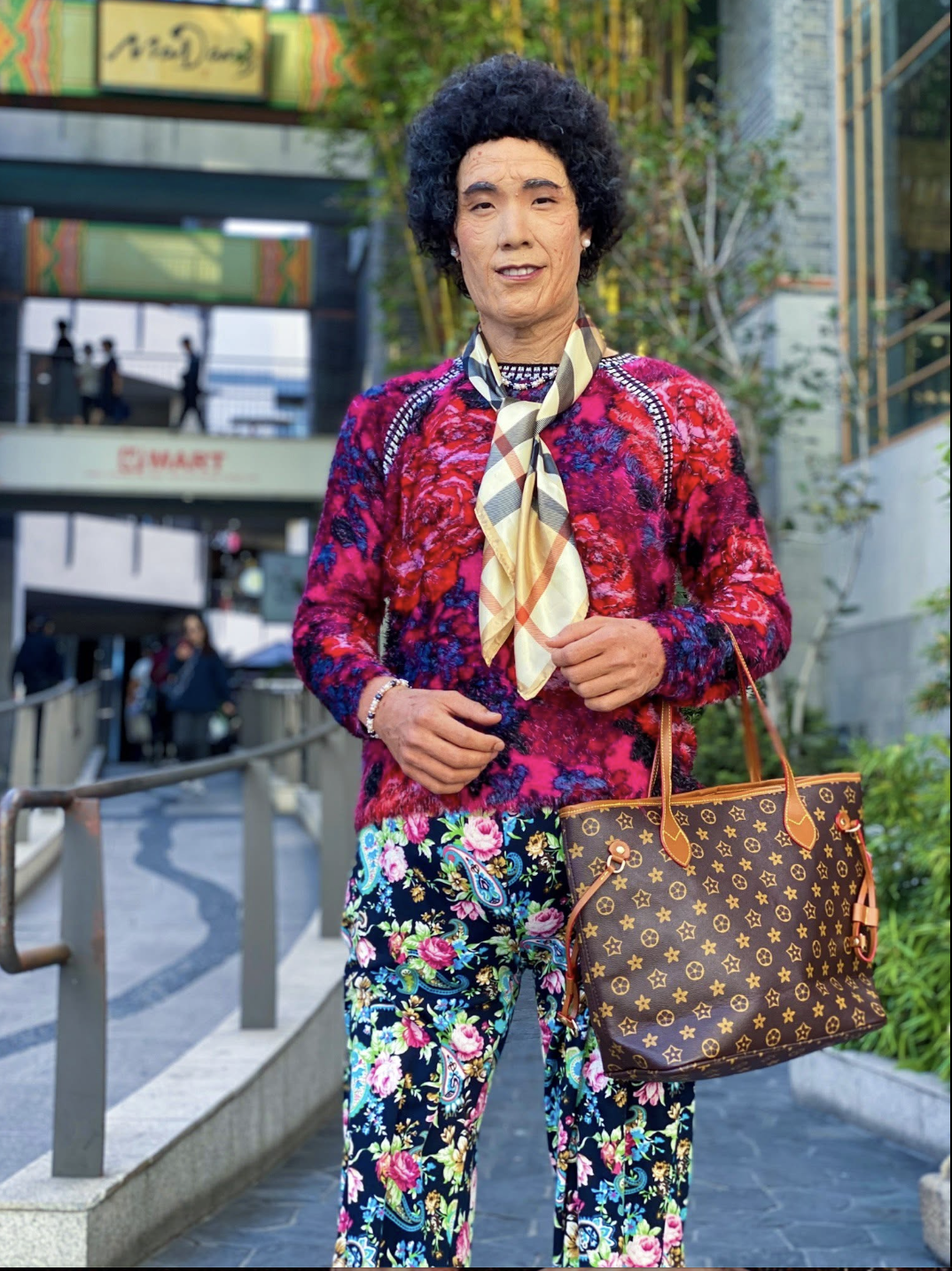
Eugene Yang as an ajumma - note the faux Nova Check scarf and faux Vuitton bag
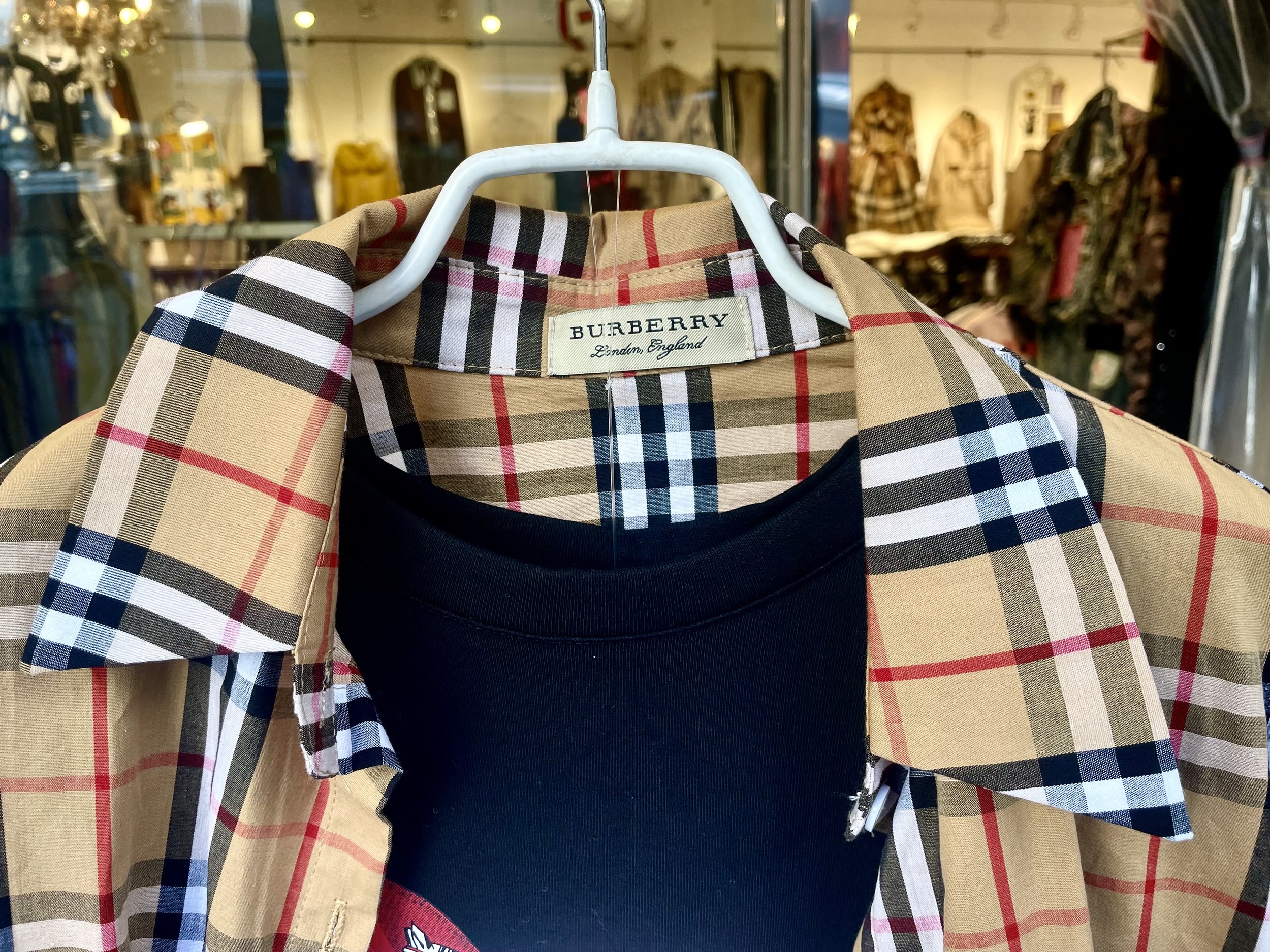
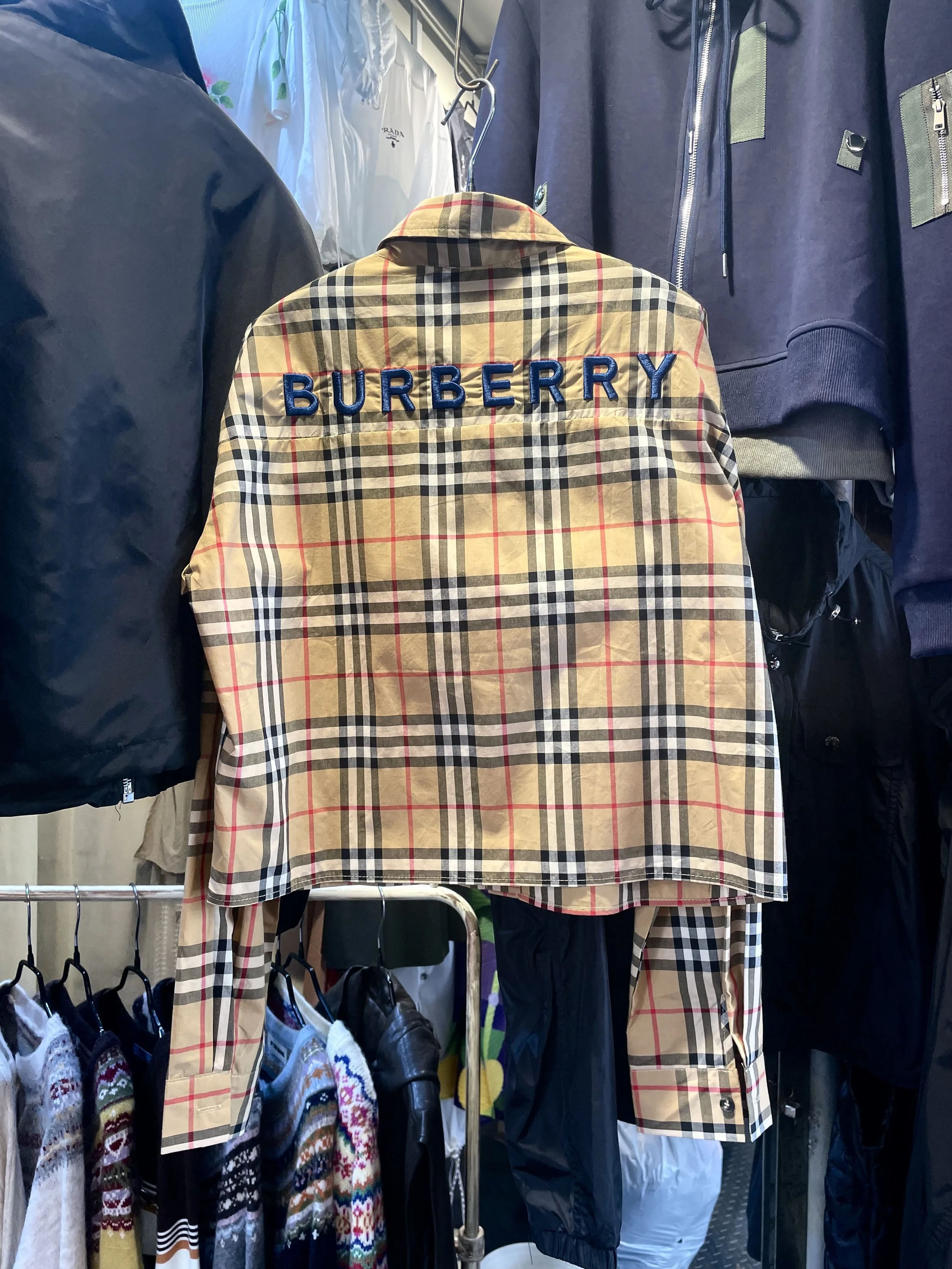
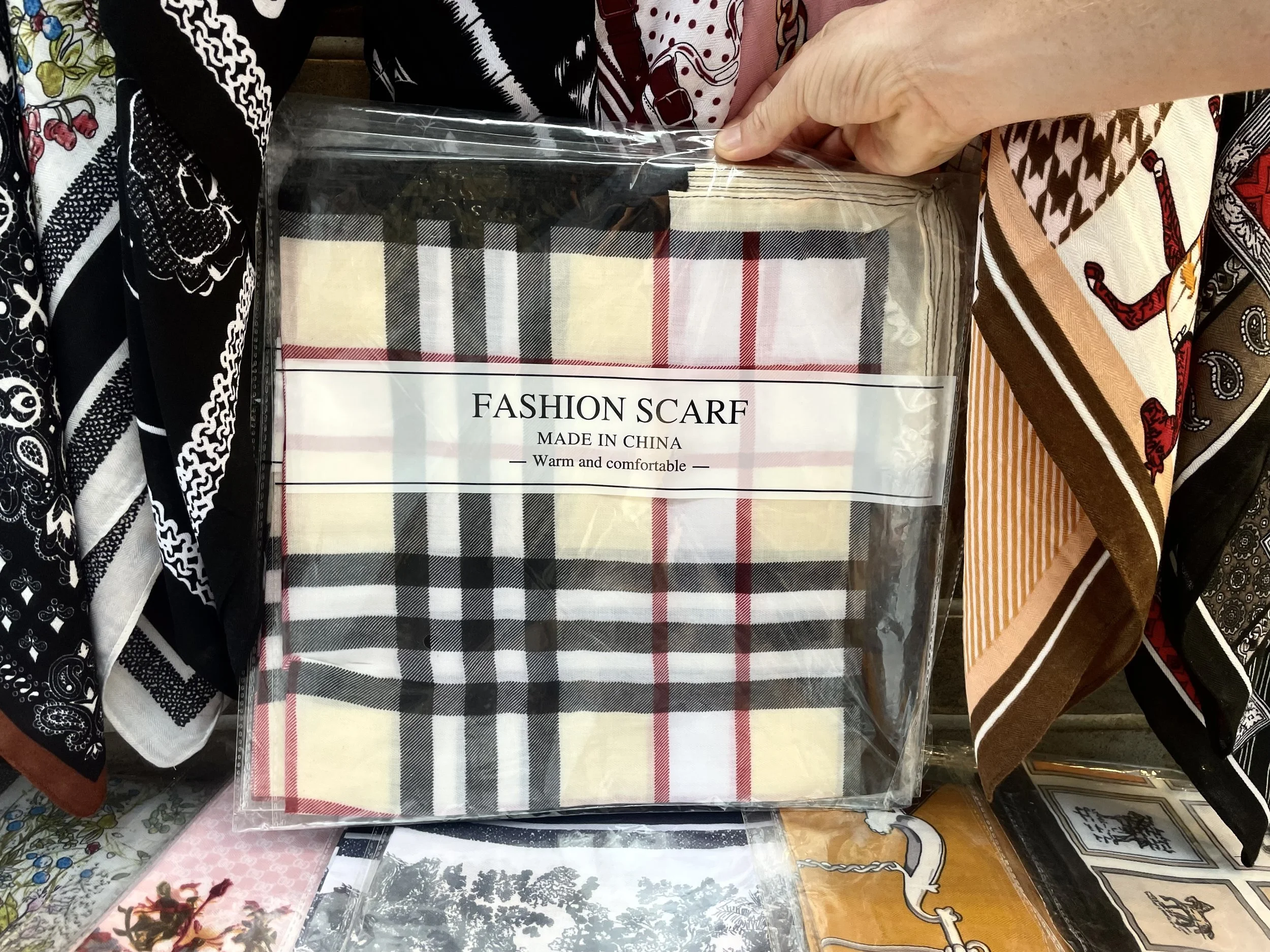
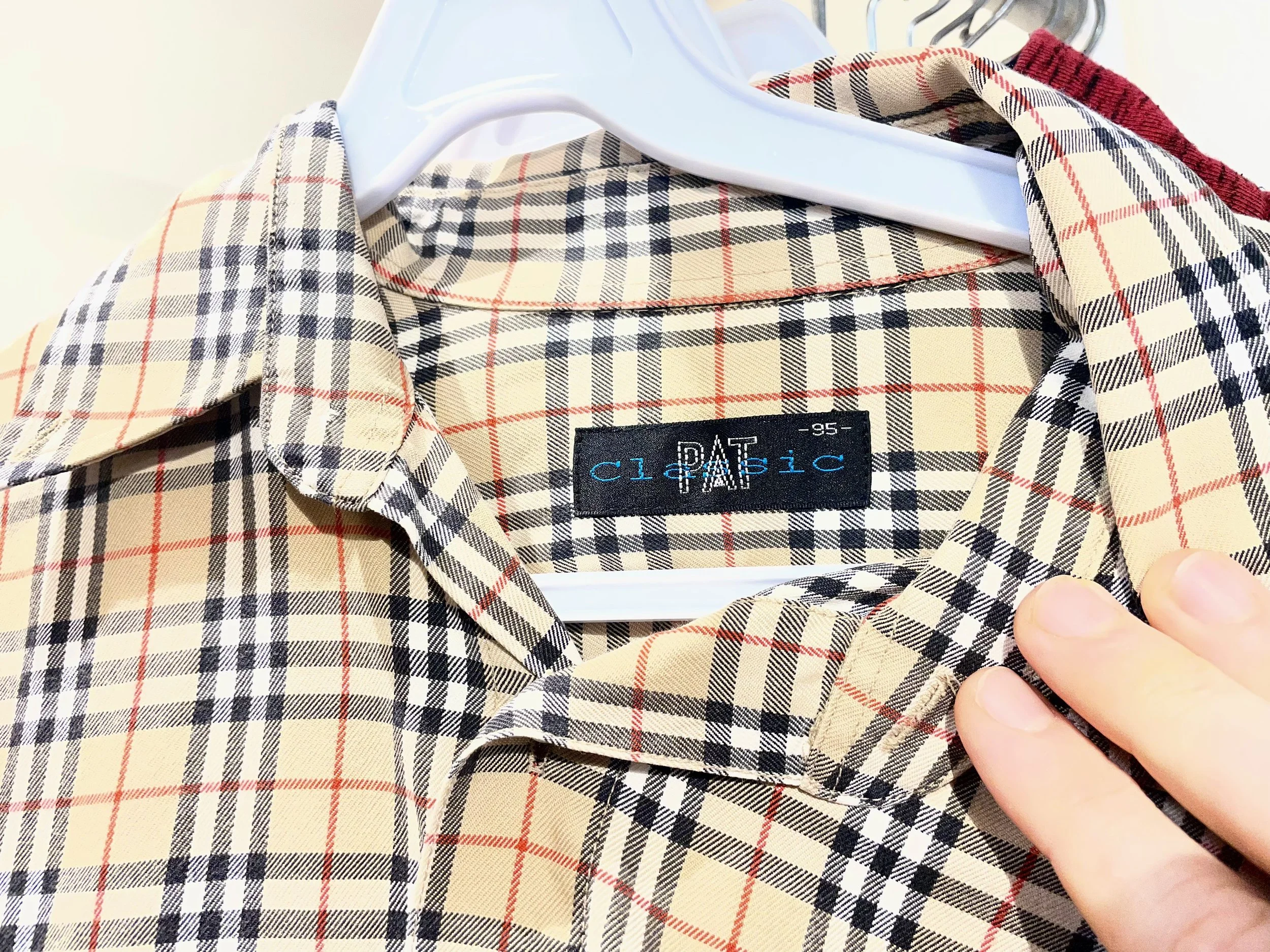
real Burberry (two left) and knockoff Nova Check (two right) at the Gukje market in Busan
I don’t think I ever saw anyone under the age of 65 wearing Burberry in Busan. Or later when I got to Seoul. Fashion has always been youth obsessed, but Burberry was clearly a brand for the geriatric.
But, counterpoint: eh, whatever. (“accessible luxury,” no?)
As with chavs – if I can make an extremely far-fetched a comparison between subversive British youth subculture of the early 2000s and staid Korean grandmothers – the accessories were prioritized over the more traditional coats. And if I had to guess, it is probably for the similar reason of price accessibility – they just cost less to acquire. But also, and in a point of departure, they signal understatement and financial good sense. Because while chavs wanted to adopt and subvert the original meaning of the plaid - make it something gaudy - every ajumma most definitely wanted the original association of refinement, but not of ostentation. There is no need to throw away a week’s wages on a coat. A scarf or a handbag was plenty enough to signal one’s good sense and financial well being. That one had one’s priorities straight, and all one’s ducks in a row. And a scarf purchased from a flea market was an even better investment, costing a fraction of new. It wasn’t as though they spoiled, afterall, and the classic only appreciates with time. Through that prism even a fake could be seen as a sensible investment. (I’m personally of the opinion that fakes don’t dilute brand potency. They reaffirm it.)
In some ways it was a return to the styling choices of the 1920s, when the plaid was still purely in the linings, and Burberrys of London operated “with the right side out”, the plaid cuffs coyly rolled in revelation only for those within the know. In similar fashion, the local preference was for restraint.
There are plenty of Burberry imitators. But the real deal is also out there. Not just the accessories, but also the original coats. At the same market in Busan (Gukje, seriously, it’s an amazing place and you should absolutely visit if you find yourself in South Korea) I saw a vintage 1970s all wool, hand finished winter coat with the 1970s “Burberrys” (extra ‘s’) logo for sale for ₩375,000 KRW, about $275 USD, which retails for around $1000 USD, and I’m kicking myself I didn’t buy it. I mean, I looked like an overdressed potato in the thing, but I still wanted it.
That may in part be the power of a flea market. (Just tell me I’m paying a fraction of the item’s true worth and I am an absolute sucker.) But that’s also the power of accessible luxury. You not only want it. You actually believe it is yours to have.
~C